

What Are Concept Sarees? Everything You Need to Know Before Choosing One
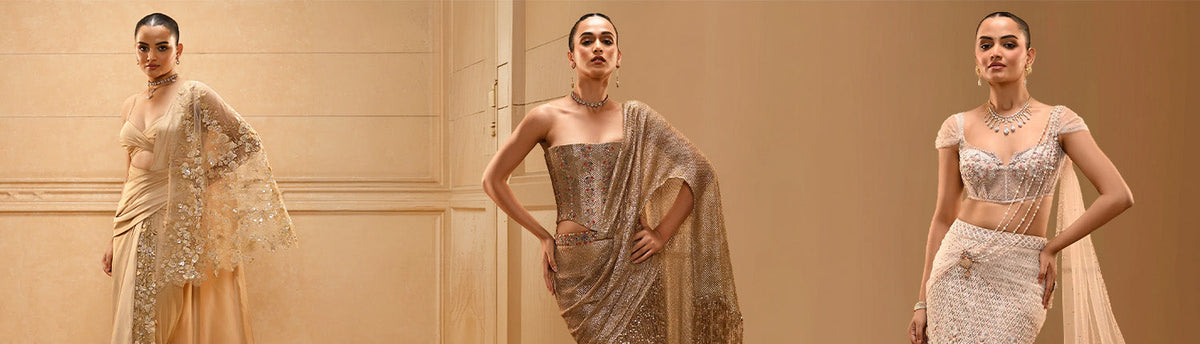
A concept saree rethinks the conventional saree through its construction, draping, layering or combination of separates. While the traditional saree relies on a continuous length of fabric wrapped and pleated around the body, a concept saree is often pre-structured to create a defined silhouette while retaining the visual language of a saree.
This makes concept saree designs particularly relevant for contemporary occasion dressing. They offer the familiarity of a saree while introducing elements such as corsets, structured blouses, pre-draped pallus, skirts, layered fabrics and embellishment-led surfaces.
For someone considering a concept saree online, understanding how these pieces are constructed and styled can make it easier to select a design that suits the occasion, personal style and desired level of detailing.
What Is a Concept Saree?
The concept saree meaning lies in its interpretation of the traditional drape. Instead of following a conventional saree construction, the garment is developed around a specific design concept that may combine multiple components or introduce a more sculpted silhouette.
A concept saree can include:
- A pre-draped or partially draped skirt
- A structured corset or blouse
- A separate pallu
- Layered or asymmetric draping
- Embroidered or embellished panels
- Contemporary fabrics and surface treatments
- Integrated belts, bodysuits or other structural elements
The result is a garment that retains the visual identity of a saree while offering a more controlled and contemporary fit.
How Is a Concept Saree Different From a Traditional Saree?
The most noticeable difference is construction. A traditional saree is generally a single length of fabric that is draped according to a particular style. The final silhouette depends on how the fabric is pleated, tucked and positioned.
A concept saree is designed with the final silhouette in mind from the beginning. The draping may already be incorporated into the garment, which means the wearer does not need to create every fold and pleat manually.
This can make concept sarees particularly practical for formal occasions where a polished appearance is important. It also allows designers greater freedom to experiment with proportions, layering and structure.
Why Are Concept Sarees Popular for Occasion Dressing?
Concept sarees have become increasingly relevant because they combine the sophistication associated with saree dressing with a more defined contemporary silhouette.
They can work particularly well for receptions, cocktail evenings, festive gatherings, formal dinners and other occasions where traditional dressing is expected but a more modern interpretation is preferred.
Their ease of wear and comfortable, structured construction also make them a practical choice for destination weddings, where effortless dressing and ease of movement are especially important.
For women who enjoy designer concept sarees, this flexibility allows the saree to become part of a more individually styled ensemble rather than following a fixed formula.
What Fabrics Work Best for Concept Sarees?
Fabric plays an important role in how a concept saree falls and holds its shape. Lightweight fabrics can create fluid drapes, while structured textiles can support more defined silhouettes.
Common choices include:
- Charmeuse: Suitable for fluid, softly draped silhouettes with a smooth finish.
- Tulle: Works well for layered drapes, corsets and sheer structural elements.
- Georgette: Offers movement while supporting embroidery and embellishment.
- Chanderi: Provides a lighter, more structured base for contemporary interpretations.
- Sequin fabrics: Create a stronger statement for evening and occasion wear.
The choice should ultimately depend on the construction of the garment and the type of occasion for which it is intended.
How to Choose the Right Concept Saree for an Occasion
Not every concept saree serves the same purpose. The level of embellishment, silhouette and fabric should correspond to the occasion.
For a formal evening, an embellished design with crystals, sequins, pearls or intricate embroidery can create a more pronounced look. For a daytime gathering, a softly draped or minimally embellished design may feel more appropriate.
It is also worth considering the structure of the blouse or corset. A fitted, highly embellished top creates a stronger statement, while a softer blouse allows the drape itself to remain the focus.
Our Best Concept Sarees
Embroidered Drape Saree

The Embroidered Drape Saree interprets the classic silhouette through a charmeuse construction with a floral embroidered pallu. It is paired with a softly gathered contemporary blouse, creating a fluid yet considered occasion look.
Materials: Blouse and Concept Saree – Charmeuse
Color: Gold
Sequinned Fringe Saree

The Sequinned Fringe Saree combines an embellished sequin surface with fringe detailing and a structured embroidered corset blouse. The combination creates a defined silhouette suited to formal evening dressing.
Materials: Blouse and Concept Saree – Sequin Fabric
Color: Gold
Pearl Basra Concept Saree

The Pearl Basra Concept Saree brings together pearls, French knots, cutdana and sequins with a structured embellished corset and draped tulle pallu. Its layered construction gives the traditional saree silhouette a more contemporary direction.
Materials: Corset and Skirt – Indian Tulle
Color: Ivory
Crystal Draped Saree

The Crystal Draped Saree features sequin embroidery enhanced with crystal work. A fitted corset and layered drape, finished with Swarovski crystal accents, create a polished evening silhouette.
Materials: Corset and Concept Saree – Tulle
Color: Black
Rococo Floral Concept Saree

The Rococo Floral Concept Saree combines pearls, sequins, threadwork, crystals and three-dimensional floral embellishments. It is paired with an intricately embroidered corset and pre-draped palla for a structured interpretation of the saree.
Materials: Bodysuit and Skirt – Indian Tulle
Color: Blush
Ever Bloom Draped Concept Saree And Corset

The Ever Bloom Draped Concept Saree And Corset combines a draped silhouette with a structured corset, creating a contemporary occasion ensemble. Its combination of Dana Georgette and Chanderi adds variation to the construction and surface.
Materials: Dana Georgette, Chanderi
Color: Black-Gold
How to Style a Concept Saree
Because the construction already provides definition, styling should work with the silhouette rather than compete with it.
A heavily embellished concept saree can be paired with refined jewelry, allowing the embroidery or surface work to remain central. More minimal designs offer greater freedom to introduce statement earrings, bracelets or other accessories.
The blouse or corset should also be considered when selecting jewelry. A high neckline or heavily detailed bodice may require a more restrained approach, while an open neckline can accommodate a stronger necklace.
Footwear should complement the length and structure of the garment, particularly with pre-draped designs where the hemline is already fixed.
Is a Concept Saree Right for You?
A concept saree can be an excellent choice if you want the visual character of traditional saree dressing with a more structured and contemporary approach.
It is particularly suited to women who prefer defined silhouettes, streamlined dressing, and garments that require less manual draping. At the same time, the range of concept saree designs means there is considerable variation in how traditional or contemporary the final look can appear.
At Tarun Tahiliani, this approach is reflected through refined drapes, structured silhouettes, intricate embellishment and considered craftsmanship, creating concept sarees designed for the modern wardrobe.
Frequently Asked Questions
1. What is a concept saree?
A concept saree is a contemporary interpretation of the traditional saree, often featuring pre-draped construction, structured blouses, corsets, layered fabrics or integrated elements for a defined silhouette.
2. What is the difference between a concept saree and a normal saree?
A traditional saree is usually a single fabric length that requires draping, while a concept saree incorporates the drape into its construction, often creating a more structured and ready-to-wear silhouette.
3. Are concept sarees easy to wear?
Yes. Many concept sarees are pre-draped or partially structured, making them easier to put on than traditional sarees. They provide a defined silhouette without requiring extensive pleating or draping.
4. Where can I wear a concept saree?
Concept sarees are suitable for receptions, cocktail parties, weddings, festive celebrations, formal dinners and other occasions where contemporary occasion dressing with traditional influences is appropriate.
5. How do I style a designer concept saree?
Style a designer concept saree according to its embellishment and structure. Keep accessories refined with heavily detailed designs, while simpler silhouettes can accommodate more distinctive jewelry and statement styling.