

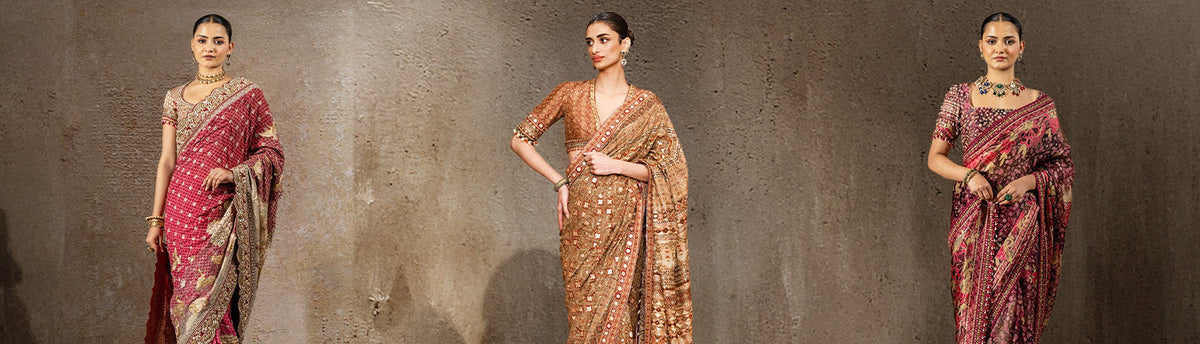
Designer Sarees for Weddings: Timeless Elegance for Every Celebration
The saree remains one of the most enduring choices in Indian wedding wear. Across generations and regions, it has continued to hold its place at wedding celebrations, adapting in fabric, embroidery and construction while retaining its essential grace. For brides, mothers and guests attending a wedding today, choosing a designer saree involves more than selecting a colour, it requires understanding fabric behaviour, embroidery technique and how a particular drape will suit the occasion at hand.
Why Designer Sarees Remain Essential for Wedding Celebrations
Weddings in India typically span several functions, each with its own mood and dress code. The saree's versatility makes it suited to nearly all of them, from the drama of a sangeet to the formality of the main ceremony. Its drape allows for movement while maintaining structure and its surface offers ample space for embroidery, print and embellishment work.
Designer sarees for women today are rarely limited to traditional silk weaves alone. Organza, georgette and lace are now widely used, each bringing a different quality of movement and light to the finished garment. Understanding these fabric choices, alongside the embroidery techniques applied to them, helps in selecting a saree suited to a specific function and personal style.
Here are our best recommendations:
Golden Light Floral Organza Saree

Organza is known for its sheer, crisp texture, which holds embroidery and print work with clarity while allowing the fabric to move freely. The Golden Light Floral Organza Saree uses this quality to good effect, featuring floral motif prints across a classic organza base, finished with embroidered borders. A hand-embroidered blouse completes the ensemble, adding a tailored contrast to the fluidity of the saree itself.
Presented in plum, this saree suits daytime wedding functions particularly well, where organza's lightness and the depth of the plum shade together create a look that feels rich without being heavy. The floral motifs and embroidered borders add detail without overwhelming the overall silhouette, making this a practical choice for functions that involve extended standing or movement, such as a mehendi or a daytime reception.
Quintessence Kashida Embroidered Saree

Kashida embroidery, traditionally associated with Kashmiri craftsmanship, is recognised for its fine needlework and dense, layered patterns. The Quintessence Kashida Embroidered Saree brings this technique to a georgette base, further embellished with sequins, pearls, crystals and zardozi work. This combination of embroidery styles results in a saree with considerable surface texture and visual depth.
Available in a multi colourway in red, this saree draws its character from the interplay of its embellishments rather than a single dominant shade. Georgette, as a fabric, provides enough fluidity to let the embroidery catch light as the wearer moves, making this saree well suited to evening functions where lighting plays an important role in how embellishment is perceived. It is paired with a complementing blouse, allowing the saree's embroidery to remain the focal point of the ensemble.
Quintessence Embellished Signature Pichwai Saree

Pichwai art, traditionally used in temple paintings depicting scenes from Krishna's life, has become an increasingly sought-after source of inspiration in Indian embroidery. The Quintessence Embellished Signature Pichwai Saree translates this artistic tradition onto a georgette saree, using 3D floral embellishments alongside Kashida embroidery, crystals, pearls, sequins and mother-of-pearl beads. This layering of techniques and materials creates a saree with substantial textural richness, suited to significant wedding functions where a more elaborate presentation is appropriate.
Rendered in shades of red, this saree aligns with traditional bridal colour preferences while distinguishing itself through its embellishment detail. The hand-embroidered zardozi blouse paired with the saree extends the level of craftsmanship across the full ensemble, rather than concentrating it solely on the drape. This saree is particularly suited to the primary wedding ceremony, where red continues to hold cultural and symbolic significance.
Ever Bloom Lace Embroidered Saree

Lace, as a saree fabric, offers a distinctly different quality from georgette or organza; its inherent texture and pattern reduce the need for heavy additional embroidery, allowing the fabric itself to carry visual interest. The Ever Bloom Lace Embroidered Saree makes use of this quality, presenting a refined, delicate surface suited to brides and guests seeking a softer aesthetic.
Finished in a blush-ombre shade, this saree moves through gradients of colour across its length, adding subtle dimension to the drape. This ombre effect makes the saree particularly well suited to daytime functions and outdoor settings, where natural light highlights the gradual colour transition. Its restrained embellishment also makes it a versatile option for guests attending multiple functions, given its lighter weight and easier styling.
Ever Bloom Rabari Accented Saree

Rabari embroidery, originating from the Rabari community of Gujarat and Rajasthan, is distinguished by its use of mirror work and detailed stitching, traditionally applied to convey identity and heritage. The Ever Bloom Rabari Accented Saree incorporates this tradition through Rabari-accented borders, finished with shells and mirror work, paired with a complementing blouse.
Presented in rust, this saree suits functions with a folk or regional theme, such as a sangeet or haldi, where its craft-forward detailing complements the celebratory, informal mood of the event. The combination of shells and mirror work adds tactile and visual texture, distinguishing this saree from more conventional embroidered options while remaining rooted in an established textile tradition.
Caring for Embellished Wedding Sarees
Designer sarees, particularly those with embroidery and embellishment, require specific care to preserve their finish over time:
- Store sarees flat or loosely rolled rather than tightly folded, to prevent creasing along embroidered sections.
- Keep embellished sarees wrapped in muslin cloth rather than plastic, allowing the fabric to breathe and reducing the risk of discolouration.
- Avoid direct spraying of perfume or deodorant on the fabric, as this can stain delicate materials like organza and lace.
- Dry clean only, using a cleaner experienced in handling zardozi, sequins and mirror work, to avoid damage to embellishments.
- Refold sarees periodically, along different lines, to prevent permanent crease marks from forming in one place.
Why Tarun Tahiliani Designer Sarees Stand Apart
For decades, Tarun Tahiliani has approached Indian occasion wear through the lens of craftsmanship, innovation and impeccable construction. Every saree reflects a thoughtful balance between traditional Indian embroidery techniques and contemporary silhouette engineering.
Signature elements such as sculpted blouses, fluid drapes, carefully placed embroidery and exceptional attention to proportion create garments that feel effortless despite their complexity. Rather than following seasonal trends alone, the collections focus on enduring design that remains relevant for years.
This philosophy continues to define Tarun Tahiliani's approach to luxury wedding fashion, where every saree is designed not only to make an impression but also to deliver exceptional comfort, movement and refinement.
Conclusion
Designer sarees for weddings today draw from a wide range of embroidery traditions and fabric choices, offering considerable depth for those selecting wedding wear. From the fine needlework of Kashida embroidery to the folk-rooted detailing of Rabari borders, each technique brings its own character to the saree, allowing for a considered choice suited to the specific function, colour palette and personal style of the wearer.
FAQS
1. What is the best fabric for designer sarees for weddings?
Organza, georgette, silk, chiffon and tulle are among the most popular fabrics. The right choice depends on the ceremony, season, comfort and the level of embellishment you prefer.
2. Can designer sarees be worn for different wedding functions?
Yes. Designer sarees are suitable for engagements, sangeet, wedding ceremonies, receptions and festive celebrations. Selecting the right embroidery, fabric and silhouette helps match the occasion perfectly.
3. How do I choose the right designer saree for a wedding?
Consider the event, venue, season and your personal style. Fabric, embroidery, drape and comfort should work together to create a look that feels elegant and appropriate.
4. Are designer sarees worth investing in for weddings?
Designer sarees offer exceptional craftsmanship, premium fabrics and timeless design. Their versatility and enduring appeal make them a valuable addition to a thoughtfully curated occasion wear wardrobe.
5. How should I accessorise a designer saree for a wedding?
Pair your designer saree with refined jewellery, a coordinated clutch and elegant footwear. Keep accessories balanced with the saree's embroidery to achieve a sophisticated and well-composed wedding look.