
Article: Kanjivaram Silk Sarees: What Makes Them Special? History, Types, Designs & Styling Tips

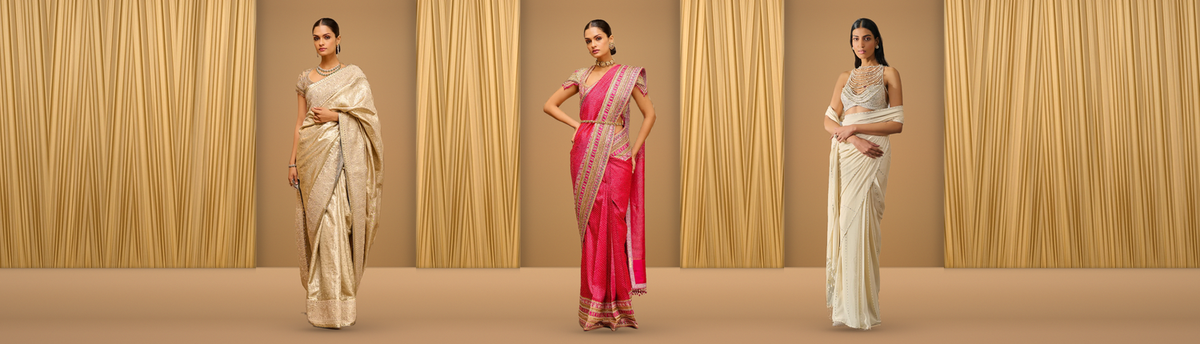
Kanjivaram Silk Sarees: What Makes Them Special? History, Types, Designs & Styling Tips
Kanjivaram silk sarees have long been celebrated for their rich South Indian heritage, distinctive silk texture, and enduring place in Indian occasionwear. Traditionally associated with the temple town of Kanchipuram in Tamil Nadu, these sarees are known for their structured drape, lustrous silk, intricate motifs, and beautifully defined borders.
Over time, Kanjivaram sarees have evolved beyond traditional wedding wardrobes. Contemporary designers are interpreting their classic vocabulary through modern silhouettes, embroidery, embellishment, pre-draped constructions, and unconventional blouse pairings.
For the modern wardrobe, the appeal of Kanjivaram silk lies in this balance between heritage and contemporary design. Tarun Tahiliani brings this heritage into a contemporary design language, with interpretations that range from classic hand-embroidered sarees to concept drapes and embellished silhouettes, highlighting the textile's versatility for weddings, festive occasions, receptions, and formal celebrations.
What Are Kanjivaram Silk Sarees?
Kanjivaram silk sarees are traditional silk sarees associated with Kanchipuram, a historic temple town in Tamil Nadu renowned for its weaving heritage. Traditionally woven from silk, these sarees are distinguished by their lustrous appearance, substantial drape, elaborate borders, and motifs inspired by Indian art, architecture, nature, and cultural symbolism.
The terms Kanjivaram, Kanjeevaram, and Kanchipuram silk saree are commonly used to refer to this traditional saree style.
Their appeal comes from more than their visual richness. A Kanjivaram saree brings together textile heritage, craftsmanship, colour, motif, and silhouette, making it one of the most recognisable forms of Indian traditional occasionwear.
Why Are Kanjivaram Silk Sarees So Special?
Several characteristics contribute to the enduring appeal of Kanjivaram silk sarees.
1. A Rich South Indian Weaving Heritage
Kanjivaram sarees are rooted in the weaving traditions of Kanchipuram. The craft has developed over generations, with weavers creating sarees known for their distinctive silk texture, intricate motifs, and elaborate borders.
This heritage gives the saree a cultural identity that goes beyond seasonal fashion trends.
2. Distinctive Borders and Motifs
One of the defining visual elements of a traditional Kanjivaram saree is its border. Borders can create a strong contrast with the body of the saree, while motifs may draw inspiration from traditional Indian forms, including florals, nature, temple architecture, and geometric patterns.
The combination of body, border, and pallu gives the saree its characteristic visual rhythm.
3. Lustrous Silk and Structured Draping
Kanjivaram silk has a distinctive sheen and substantial fall. When draped, the fabric creates a structured silhouette that lends itself naturally to weddings, festive celebrations, and formal occasions.
Its structured appearance also allows contemporary designers to experiment with new draping techniques and silhouettes without losing the visual character of the traditional textile.
4. Heritage That Adapts to Contemporary Fashion
The Kanjivaram aesthetic is no longer limited to a conventional saree-and-blouse combination. Designers today reinterpret the textile through modern embroidery, embellished blouses, pre-draped silhouettes, corsets, and layered styling.
This ability to evolve while retaining its traditional identity is one of the reasons Kanjivaram silk continues to resonate with contemporary Indian fashion.
A Brief History of Kanjivaram Silk Sarees
The history of Kanjivaram silk sarees is closely connected to the weaving traditions of Kanchipuram. The town developed a strong reputation for silk weaving, with communities of skilled weavers contributing to the evolution of the craft.
Over generations, Kanjivaram sarees became closely associated with South Indian weddings, religious celebrations, festivals, and other important occasions.
The saree's motifs and design vocabulary also reflect its cultural surroundings. Temple-inspired elements, traditional florals, geometric patterns, and nature-inspired forms have all found expression within Kanjivaram weaving.
What began as a regional textile tradition gradually became recognised across India as a symbol of traditional Indian craftsmanship and ceremonial dressing.
Today, Kanjivaram silk continues to occupy an important place in Indian fashion while also inspiring designers to reinterpret its visual language for modern wardrobes.
What Are the Different Types of Kanjivaram Silk Sarees?
Kanjivaram sarees can be understood through differences in colour, motifs, borders, weaving techniques, and contemporary construction.
Traditional Kanjivaram Silk Sarees
Traditional Kanjivaram sarees typically emphasise the richness of silk, distinctive borders, classic motifs, and a structured drape. They remain a popular choice for weddings, bridal wardrobes, religious occasions, and festive celebrations.
Embroidered Kanjivaram Sarees
Contemporary interpretations may combine the traditional Kanjivaram silhouette with embroidery. This allows designers to introduce additional texture and detail while retaining the identity of the saree.
Embroidered interpretations can bring additional dimension to the traditional silhouette while allowing the saree to transition into more contemporary occasionwear.
Pre-Draped and Concept Kanjivaram Sarees
For those looking for a contemporary alternative to conventional draping, pre-draped Kanjivaram-inspired silhouettes offer a more structured approach.
These interpretations can introduce modern construction and unconventional blouse silhouettes while retaining the visual presence associated with the saree.
Embellished Kanjivaram Sarees
Embellishment can give the traditional saree a more contemporary eveningwear character. Crystal detailing, lace, metallic embroidery, and other surface treatments can add dimension to the classic silhouette.
This approach allows the richness of the traditional saree to be interpreted for receptions, formal celebrations, and other evening occasions.
Kanjivaram Silk Sarees in Contemporary Designer Fashion
The evolution of Kanjivaram silk sarees demonstrates how traditional Indian textiles can move naturally into contemporary wardrobes.
Rather than replacing heritage elements, modern designers often build around them. A traditional textile may be paired with a sculptural blouse, contemporary drape, intricate embroidery, or modern embellishment.
Tarun Tahiliani's approach to Indian occasionwear reflects this relationship between heritage and contemporary design. The saree becomes a foundation for exploring proportion, texture, construction, and craftsmanship.
The result is a style language that feels rooted in Indian tradition while remaining relevant to contemporary occasion dressing.
Kanjivaram & Contemporary Saree Edit by Tarun Tahiliani
Tarun Tahiliani brings traditional Indian textiles and saree silhouettes into a contemporary design vocabulary through embroidery, modern construction, embellishment, and considered blouse pairings. The following selection reflects different approaches to Kanjivaram and contemporary saree dressing, from hand-embroidered heritage-inspired designs to concept silhouettes and evening-oriented interpretations.
Otherworldly Kanjivaram Hand Embroidered Kashida Saree

The Otherworldly Kanjivaram Hand Embroidered Kashida Saree retains the classic character of the Kanjivaram saree while introducing intricate hand embroidery. It features a hand-embroidered Kashida border and is paired with a complementing hand-embroidered blouse. The combination brings together the traditional presence of Kanjivaram with detailed embroidery, creating an interpretation suited to contemporary Indian occasionwear.
Quintessence Kanjivaram Concept Saree

The Quintessence Kanjivaram Concept Saree presents the traditional saree through a more structured, contemporary construction. Designed as a pre-draped Kanjivaram concept, it is paired with a fully embroidered Bidri-inspired corset. The combination brings together the visual identity of the saree with an unconventional blouse silhouette, offering a modern interpretation of Indian occasion wear.
Otherworldly Classic Kanjeevaram Embellished Saree

The Otherworldly Classic Kanjeevaram Embellished Saree interprets the traditional Kanjeevaram saree through contemporary embellishment. The saree is accentuated with Chantilly lace and Swarovski crystal embellishments and paired with a metallic embroidered blouse. The detailing introduces a more elaborate evening character while retaining the recognisable presence of a traditional Kanjeevaram silhouette.
Ever Bloom Classic Saree With Embroidered Blouse

The Ever Bloom Classic Saree With Embroidered Blouse offers another interpretation of the classic saree format, with the embroidered blouse forming an important part of the overall ensemble. It can be considered within the broader conversation around contemporary Indian saree dressing, where traditional silhouettes are approached through carefully considered blouse pairings and modern styling.
SOL Blouse Saree

The SOL Blouse Saree demonstrates a distinctly contemporary approach to saree dressing. Its crystal-encrusted draped saree is paired with a layered pearl and crystal-detail blouse, creating an evening-oriented interpretation of the saree silhouette. The combination of surface detailing and modern styling makes it relevant to receptions, formal celebrations, and contemporary evening occasions.
How to Style Kanjivaram Silk Sarees
Styling a Kanjivaram silk saree does not always require an entirely traditional approach. The right blouse, jewellery, drape, and accessories can change the overall character of the look.
Pair It With a Statement Blouse
The blouse can transform the personality of a saree. For a traditional occasion, an embroidered or silk blouse can reinforce the heritage character.
For a more contemporary look, consider structured silhouettes, sculptural details, corset-inspired forms, or intricate surface embellishment.
Choose Jewellery According to the Occasion
For weddings and traditional celebrations, Kanjivaram sarees pair naturally with heritage-inspired jewellery, including temple jewellery, gold necklaces, jhumkas, bangles, and statement earrings.
For evening occasions, a more restrained jewellery approach can allow the saree's embroidery and silhouette to take centre stage.
Experiment With the Drape
A classic drape highlights the traditional character of the Kanjivaram saree. A pre-draped or concept silhouette, on the other hand, can create a more contemporary appearance.
The choice should depend on the occasion, comfort, and the overall mood you want to create.
Keep the Accessories Balanced
Because Kanjivaram silk sarees can already have a strong visual presence, accessories should complement rather than compete with the saree.
If the saree features intricate embroidery or crystal embellishment, consider keeping other elements more refined. Conversely, a relatively minimal saree can provide the perfect foundation for statement jewellery.
Can Kanjivaram Silk Sarees Be Worn for Modern Occasions?
Yes. While traditionally associated with weddings and festive occasions, Kanjivaram silk sarees can be styled for a wide range of contemporary events.
For formal celebrations, an embroidered Kanjivaram saree with a statement blouse can create an elegant occasionwear look. A pre-draped version can work particularly well for receptions, cocktail events, and fashion-forward celebrations.
For evening dressing, contemporary embellishment can give the saree a more refined and modern character.
The broader evolution of the saree demonstrates how traditional textiles can be adapted through modern draping, surface detailing, contemporary blouse silhouettes, and considered accessories.
How to Choose the Right Kanjivaram Silk Saree
Choosing a Kanjivaram silk saree begins with considering the occasion and the kind of silhouette you want to create.
For Weddings
Traditional Kanjivaram silk sarees with rich borders, classic motifs, and statement jewellery are particularly suited to wedding ceremonies. Deeper colours, contrasting borders, and heritage-inspired styling can enhance the ceremonial character of the look.
For Festive Celebrations
For festivals and family occasions, consider a saree that balances traditional detailing with a lighter styling approach. A distinctive border, elegant blouse, and carefully selected jewellery can create a polished festive look.
For Receptions and Evening Events
Embellished or concept sarees can offer a contemporary alternative. Crystal details, embroidered blouses, pre-draped silhouettes, and modern accessories can make the traditional textile feel more suited to evening dressing.
For a Contemporary Statement
If your preference is modern Indian fashion, look for unexpected blouse silhouettes, innovative draping, sculptural construction, or a combination of traditional textile references with contemporary detailing.
Why Kanjivaram Silk Sarees Remain Timeless
Fashion constantly changes, but Kanjivaram silk sarees continue to hold their place because their appeal is rooted in craftsmanship and cultural heritage rather than passing trends.
Their distinctive silk, structured drape, recognisable borders, and traditional motifs provide a strong foundation for designers to reinterpret season after season.
At the same time, modern styling has expanded what a Kanjivaram saree can represent. It can be bridal, festive, formal, sculptural, minimal, embellished, or distinctly contemporary.
This ability to retain its heritage while adapting to new expressions is what makes Kanjivaram silk particularly relevant to modern Indian occasionwear.
Frequently Asked Questions About Kanjivaram Silk Sarees
What are Kanjivaram silk sarees known for?
Kanjivaram silk sarees are known for their rich silk texture, lustrous finish, structured drape, distinctive borders, traditional motifs, and strong association with the weaving heritage of Kanchipuram in Tamil Nadu.
Is Kanjivaram the same as Kanjeevaram?
Yes. Kanjivaram and Kanjeevaram are commonly used names for the traditional silk sarees associated with Kanchipuram, Tamil Nadu. You may also see the term Kanchipuram silk saree used for this style.
Why are Kanjivaram sarees popular for weddings?
Their rich silk, structured drape, traditional motifs, and elaborate borders make them naturally suited to ceremonial dressing. They also pair well with traditional Indian jewellery and statement blouses.
Can Kanjivaram silk sarees be styled in a contemporary way?
Yes. Contemporary styling can include embroidered or sculptural blouses, pre-draped constructions, corset-inspired silhouettes, modern jewellery, and embellished details while retaining the saree's traditional character.
What jewellery goes well with a Kanjivaram silk saree?
Traditional gold jewellery, temple-inspired jewellery, jhumkas, bangles, statement necklaces, and contemporary diamond jewellery can all complement a Kanjivaram saree depending on the occasion and the level of embellishment in the outfit.
Are Kanjivaram silk sarees suitable for evening events?
Yes. Embellished versions, contemporary blouse designs, crystal detailing, and modern draping can make Kanjivaram-inspired sarees suitable for receptions, formal dinners, cocktail celebrations, and other evening occasions.
Conclusion
Kanjivaram silk sarees represent a remarkable meeting point between Indian textile heritage and enduring fashion. Their distinctive silk, traditional motifs, structured drape, and elaborate borders have given them a place in Indian occasionwear for generations.
Yet their story continues to evolve. Contemporary interpretations introduce embroidery, embellishment, innovative construction, pre-draped silhouettes, and modern blouse designs, allowing the Kanjivaram aesthetic to move seamlessly from traditional ceremonies to contemporary celebrations.
For the modern wearer, a Kanjivaram silk saree is therefore more than a traditional garment. It is a canvas for craftsmanship, styling, and personal expression—one that can honour heritage while embracing the language of contemporary Indian fashion.